
Fun facts about Spain
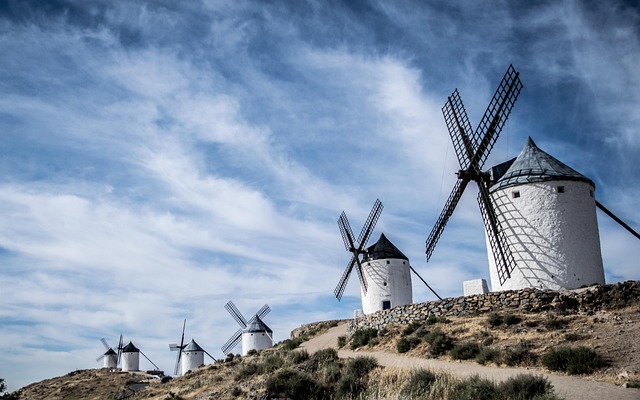
Spain, officially the Kingdom of Spain, is a vibrant country located on the Iberian Peninsula in southwestern Europe, bordering Portugal to the west and France to the northeast. As the fourth-largest country in Europe, it boasts a remarkably diverse geography, featuring rugged mountains like the Pyrenees, a high central plateau known as the Meseta, and sunny Mediterranean coastlines. With a rich history deeply influenced by Roman, Moorish, and Christian civilizations, the nation emerged as a global power in the 16th century, establishing a vast overseas empire. Today, Spain is a developed, secular parliamentary democracy that serves as a major cultural bridge between Europe and Africa. Its cultural identity is world-renowned, famous for passionate Flamenco music, the art of tapas, and a lively, social street culture. With a population of over 47 million, the nation boasts four official languages, including Castilian Spanish, which is the second-most spoken native language globally.
Five facts
Spain is a diverse Southwestern European nation occupying most of the Iberian Peninsula, characterized by its varied geography including central plateaus, mountain ranges like the Pyrenees, and over 8,000 km of coastline. As a constitutional monarchy and European Union member, it is a highly decentralized democracy with 17 autonomous regions. Spain is officially secular, with Spanish (Castilian) as the primary language alongside regional co-official languages, you can check more out on the history page.
- Number 1
- Spain is home to a unique and vibrant festival called La Tomatina, which is widely recognized as the world's largest food fight. Held every year on the last Wednesday of August in the town of Buñol, thousands of participants gather to hurl over 150,000 kilos of over-ripe tomatoes at one another just for fun. While the exact origins of this messy tradition remain a bit of a mystery, it has become a cherished national pastime that attracts visitors from all across the globe.
- Number 2
- Spain is the global leader in olive oil production, accounting for roughly 44% to 45% of the world's total supply. The country boasts an incredible landscape of over 340 million olive trees, forming what is considered the largest man-made forest on the planet. Much of this "liquid gold" comes from the Andalusia region, particularly the province of Jaén, which alone produces more olive oil than the entire country of Italy.
- Number 3
- Spain's national anthem, known as La Marcha Real (The Royal March), is one of only four in the world with no official lyrics. Originally composed as a military march in 1761, it became the official anthem in the 18th century but remains purely instrumental to this day. While there have been numerous attempts over the years to adopt lyrics, none have been officially approved, meaning that at major events like the World Cup, the crowd simply hums along to the melody.
- Number 4
- The Sagrada Família in Barcelona is a massive Roman Catholic basilica that has been under construction for over 140 years. Designed by the visionary architect Antoni Gaudí, the project began in 1882 and is still not entirely finished, making its construction period longer than that of the Great Pyramids of Giza. It is widely considered one of the most complex and breathtaking examples of Modernist architecture in the world.
- Number 5
- The Spanish New Year’s tradition involves rapidly eating twelve grapes, one at each stroke of the clock at midnight. Known as Las Doce Uvas de la Suerte, this custom is believed to bring a year of good fortune and prosperity if you finish all the grapes before the bells stop ringing. Thousands of people gather in Madrid’s Puerta del Sol or watch on television to sync their eating with the famous clock tower.